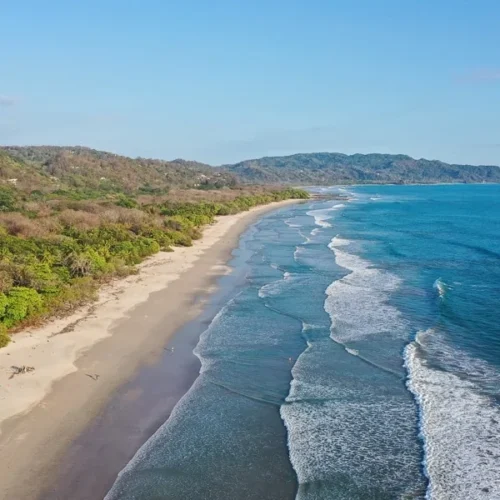
Costa Rica is a well known tropical forest, wildlife and white sand beach surfing destination. Surfing has grown into a key component of the nation’s culture and tourism industry, with waves available to ride on Pacific and Caribbean coastlines year-round.
The Early Days
Most historians use this information to conclude that surfing came to Costa Rica during the 1960s when American surfers travelling through Central America saw its warm, little travelled beaches and perfect waves. Costa Rica presented a less developed, more natural wave at the time, as compared to California and Hawaii which were already well established on the surfing map.
Pavones was discovered by surfers on the southern Pacific coast in the 1970s. Pavones is known for having the longest left-hand waves in the entire world and helped to prove Costa Rica’s worth on the global surfing stage as information about its waves began circulating.
Surfing Surges In the 1980S and 90s
It wasn’t until the 1980s that Costa Rica’s coastline and popular breaks from Tamarindo, Santa Teresa, Jacó and Dominical began appearing in surf magazines and videos. Quality waves, low-cost travelling and versatile warm weather drew another variety of surfers from all over the world.
Trend of rapid expansion of surf tourism in the 90’s. Surf schools, and camps and hostels sprang up along the coastline, especially in Guanacaste and the Nicoya Peninsula. Costa Rica started marketing itself as a place where people can surf, play and explore with nature.
The 2000s: International Recognition
Costa Rica had become one of the world’s great surf destinations by the 2000s. International competitions brought pro surfers to the country and Playa Hermosa became recognized for its difficult waves and high-performance surfing.
Costa Rican athletes soon started competing internationally as well. The likes of Carlos Muñoz and Noe Mar McGonagle proved that home-grown talent was more than capable of holding its own and giving the sport’s up-and-coming young stars aspirations.
Surfing Today
It was only the beginning and Costa Rica now gets surfers of all abilities. Playa Hermosa and Pavones, great for the more experienced airline mile help bookers who can keep their tangle of board away from other surfers are also plentiful but many, if not all like the smoother waves of Tamarindo. The surf industry remains strong, as surf schools, camps, retreats and resorts still provide vital support.
On the other hand, Costa Rica’s surfing culture has also incorporated a major sustainability component. Lots of surf companies take part in beach clean combinations, repair assignments and additional environmental projects. Also works to empower local surfing and coaches, young surfers (the Costa Rica Surf Federation)
The Future
With Costa Rica’s surf industry only continuing to grow, the preservation of its beaches and natural environment will be critical. Surfing is more than a sport, it has become part of the culture and economy.
The story of Costa Rica surfing has, from the first surfers to discover its remote waves in the 1960s to today’s international surf community, an enduring legacy that links people with adventure and the ocean.
The client will present the credit card at check in to warranty the reservation. Our FrontDesk department will request the credit card to check in at hotel. In our hotel we accept credit cards, debit cards and cash.
Cancellations Policy
High season from January 04th to March 31st, 2023
The guest can cancel free of charge until 30 days before arrival. The guest will be charged the total price of the reservation if they cancel in the 30 days before arrival. If the guest doesn’t show up, they will be charged the total price of the reservation. The guest will be charged a prepayment of the total price of the reservation in the 30 days before arrival.
Low Season from April 10th to December 24th, 2023
The guest can cancel free of charge until 14 days before arrival. The guest will be charged the total price of the reservation if they cancel in the 14 days before arrival. If the guest doesn’t show up, they will be charged the total price of the reservation. The guest will be charged a prepayment of the total price of the reservation in the 14 days before arrival.
Peak season: Non-Refundable
From April 01st to April 09th, 2023 From December 25th to January 03rd, 2024 Minimum night stay requirement Minimum stay requirements apply of 2 nights at Christmas, New Year. 25 December 2022 to 3 January 2023 / 2023 – 2024.
Children policy
Children of any age are allowed. Children up to and including 5 years old can stay for free. Children from 6 years old to 11 years old can stay for USD 40.00 per child per night. Over 11 years old we are considered as adults $65 + taxes.
Non smoking policy
Hotel Santa Teresa is a non-smoking hotel, except for designated areas. All rooms are non-smoking. Pet policy • Pets are allowed. • All pets must have the necessary equipment to sleep. • All pets must always be under the supervision of the owner responsible for them. • The owners will be responsible for collecting the excrements left in the public areas of the hotel and the gardens. • It is forbidden for pets to sleep on the furniture of the hotel and any expenses caused by damage or special cleaning that is required due to such a situation, will be borne by the owner of the pet. • Pets cannot be inside the room when the owner is absent. • Any damage caused by the pet is the responsibility of its owner. • The space and tranquility of the other guests must be respected. • Hotel Santa Teresa is not responsible for illness, death, loss, etc. of the pet.